


| You are here: ESGE » Informations » Battery Disposal |
Battery DisposalAs our shipments may contain batteries and rechargeable batteries, we are obliged under Article 74(4) of the EU Battery Directive (BattVO) to inform you of the following:
Separate collection and return of used batteries Batteries and rechargeable batteries must not be disposed of in household waste; you are legally obliged to return used batteries and rechargeable batteries. Used batteries may contain harmful substances that can damage the environment or your health if not stored or disposed of properly. However, batteries also contain important raw materials such as iron, zinc, manganese, or nickel and can be recycled. Recommendations for extending the service life of batteries
Options for reuse, repurposing, and recycling Before disposing of a battery, check whether it can be reused. Some rechargeable batteries can be reused or repurposed for other purposes, such as in energy storage systems, after professional testing and reconditioning. Return and collection points After use, you can either return the batteries to us or return them free of charge at a location in your immediate vicinity (e.g., in stores, at municipal collection points, or at our shipping warehouse). Return to points of sale is limited to normal quantities for end users and to used batteries that the distributor carries or has carried in its range as new batteries. Safety instructions for handling used batteries When handling used batteries, especially lithium-ion batteries, observe the following safety instructions: Tape over the terminals of lithium-ion batteries to prevent short circuits.
Impact on the environment and health Batteries contain substances that can cause significant damage to the environment and human health if disposed of improperly. If heavy metals such as lead, cadmium, or mercury enter the environment, they can contaminate soil and water and enter the food chain. Proper disposal is therefore essential. 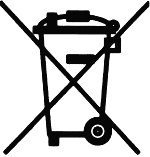 Meaning of the labels Meaning of the labelsBatteries and rechargeable batteries are marked with the symbol of a crossed-out trash can. This symbol indicates that they must not be disposed of with household waste. Under this symbol, you will also find the following symbols with the following meanings: Pb: Battery contains lead Cd: Battery contains cadmium Hg: Battery contains mercury |